Short Answer: No, Canada does not currently require most recreational boaters to wear a life jacket or Personal Flotation Device (PFD) at all times. However, Canadian law does require that there be a properly sized, approved lifejacket or PFD on board for every person on the vessel. There are some exceptions, including certain inflatable PFDs, which must be worn to meet legal requirements.
You are legally required to have an approved life jacket or PFD readily accessible for each person on board, but you are generally not required to wear it.
That said, boating safety experts strongly recommend wearing a PFD at all times while on the water. Approximately 85% to 89% of recreational boating fatalities in Canada involve people who were not wearing a lifejacket or PFD.
What Does Canadian Law Require?
Transport Canada’s Small Vessel Regulations require:
- An approved lifejacket or PFD for every person on board.
- The flotation device must be the appropriate size for the wearer.
- It must be in good condition.
- It must be readily accessible while the vessel is underway.
This applies to most recreational watercraft, including:
- Power boats
- Fishing boats
- Canoes
- Kayaks
- Paddleboards
- Sailboats
Are There Any Exceptions?
Yes.
If you choose to use an inflatable PFD to meet the legal carriage requirements, it generally must be worn while underway. Inflatable PFDs are also subject to restrictions, for example they cannot be used by children under 16 years old, individuals weighing less than 36.3 kg (80 lbs.), or operators of personal watercraft.
For more information on restrictions check out the small vessel regulations.
What’s the Difference Between a PFD and a Lifejacket?
Many Canadians use the terms interchangeably, but they are not exactly the same.
Lifejackets
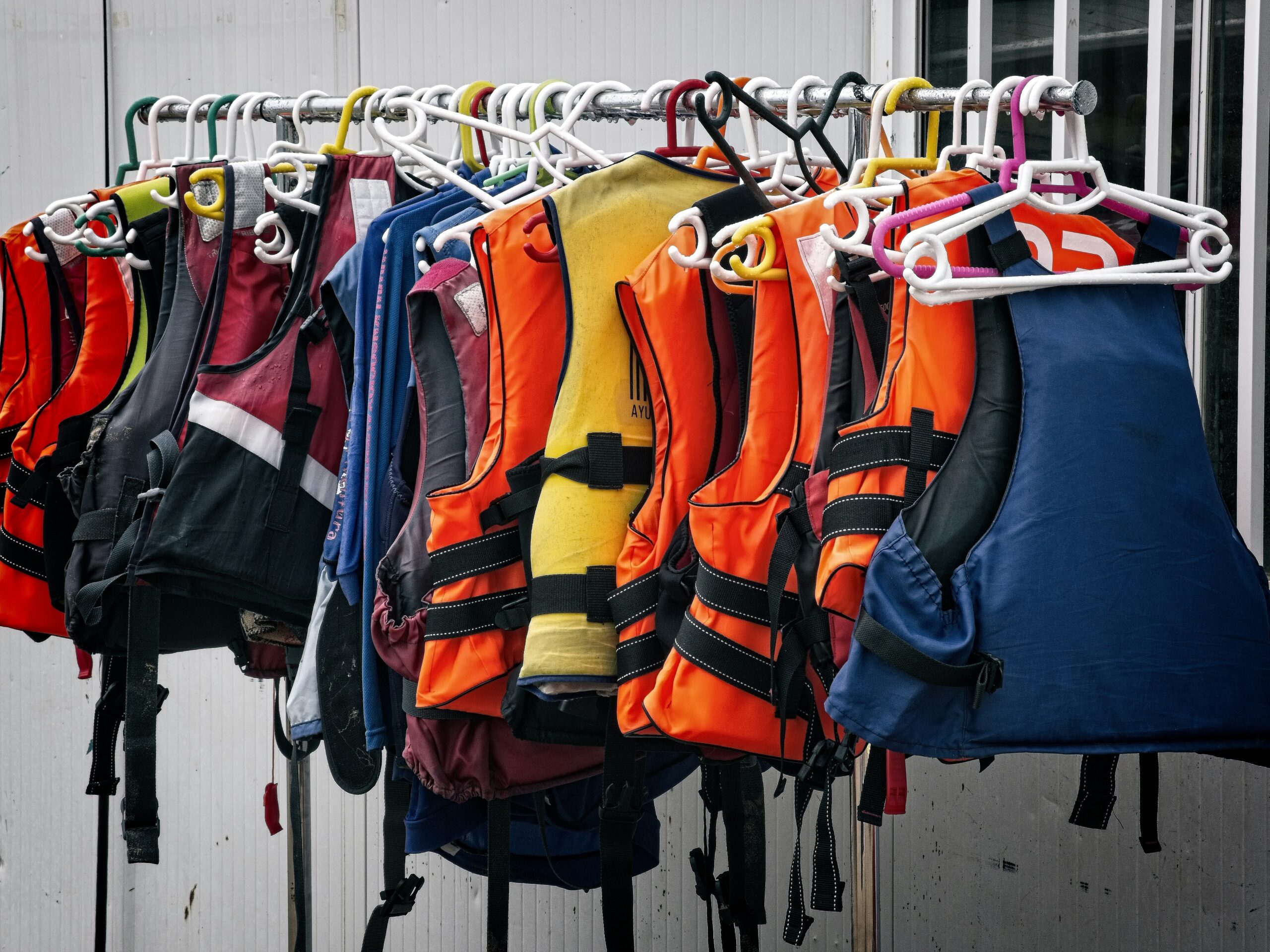
Lifejackets are designed to provide maximum flotation and are capable of turning an unconscious person face-up in the water. They are typically available in red, orange, or yellow for increased visibility.
Personal Flotation Devices (PFDs)
PFDs are generally more comfortable, lighter, and designed for continuous wear during recreational activities. They provide buoyancy but may not turn an unconscious person onto their back.
Why Wearing a Life jacket Matters
The law may not require you to wear a PFD, but statistics show why you should.
According to boating safety organizations and Transport Canada data:
- Most recreational boating fatalities involve people who were not wearing a lifejacket.
- Many incidents occur surprisingly close to shore.
- Cold water shock, unexpected falls, and sudden weather changes can quickly make self-rescue difficult.
A lifejacket cannot help you if it is stored under a seat, tucked in a compartment, or left at the dock.
Frequently Asked Questions
What happens if I don’t have enough life jackets on board?
You could face fines and penalties for failing to comply with Canada’s boating safety regulations. Every person on board must have access to a properly fitting approved flotation device.
Do lifejackets have to be worn on jet skis in Canada?
Personal watercraft (PWCs), such as Sea-Doos and jet skis, require approved flotation devices for operators and passengers. Wearing a PFD is effectively expected due to the nature of the activity and safety requirements. Inflatable PFDs are not approved for PWC operators.
How many lifejackets are required on a boat in Canada?
You must have at least one approved lifejacket or PFD for every person on board. Each flotation device must be the correct size for its intended wearer.
Can I keep lifejackets stored in a compartment?
Lifejackets must be readily accessible in an emergency. Storing them in a locked compartment or location that is difficult to access may not meet legal requirements.
The Bottom Line
While Canada does not currently require most recreational boaters to wear a life jacket or PFD at all times, the law does require that an approved flotation device be available for every passenger. The safest practice is simple: wear your life jacket whenever you’re on the water.
Emergencies happen quickly, and the majority of boating fatalities involve individuals who were not wearing one.
Need boat insurance? Whether you’re cruising, fishing, or sailing, having the right insurance protection can help you enjoy the water with confidence. Contact our team to learn more about protecting your boat, personal watercraft, and marine adventures.